25 June 2026 · 1 min read
From a single thread: how a mochila is made
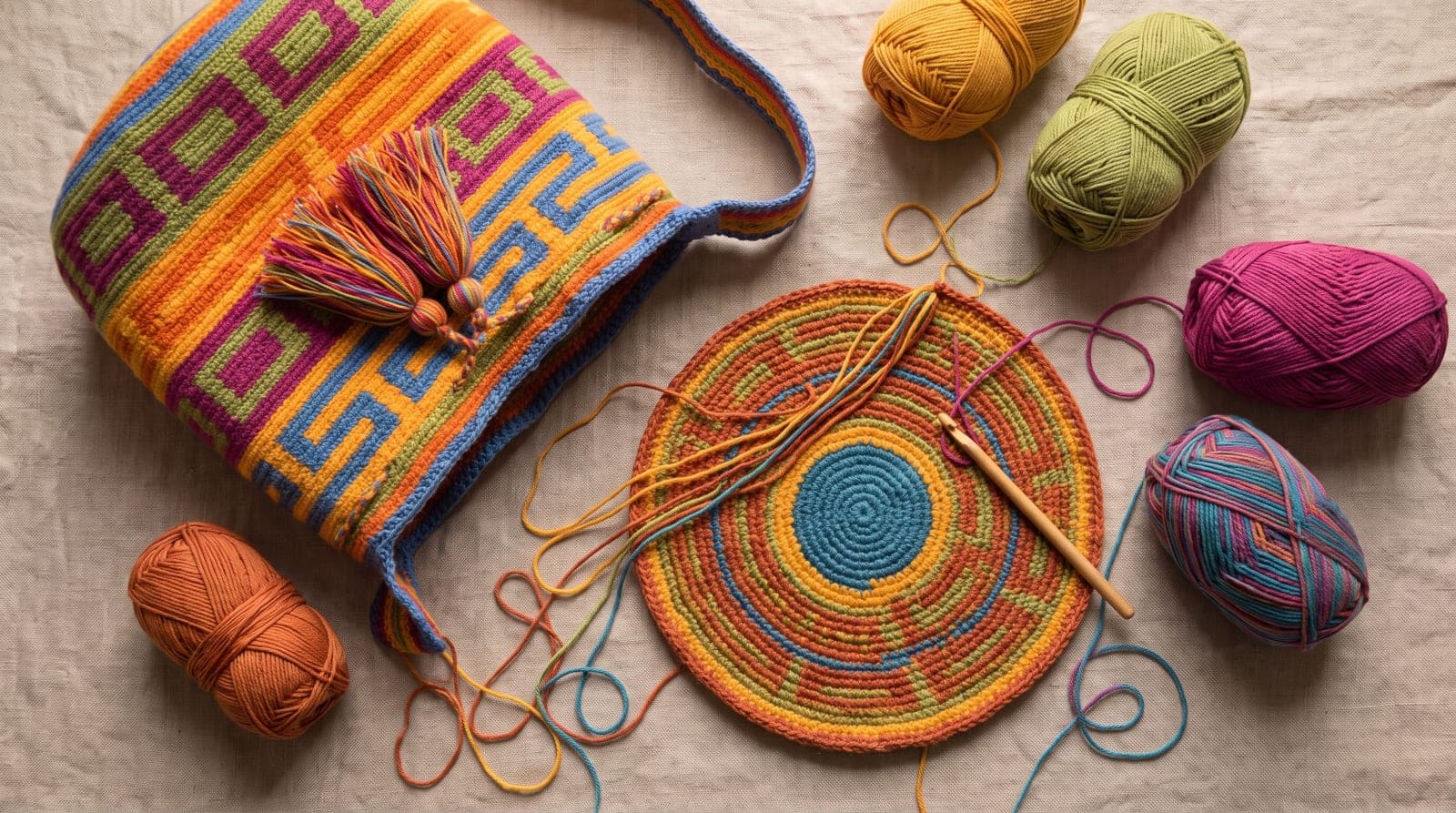
A mochila is the work of one person over several weeks. The body is not woven, as people often assume, but crocheted — with a single crochet hook as the only tool, in a refined form of what is called tapestry crochet.
It begins at the centre of the round base. Round by round it grows outward — the weavers call this the crecido — then rises straight up into a cylinder with no further increases. The base is the densest part, so the bag stands on its own. The patterns, the kanas, appear as the colour is changed stitch by stitch, the resting yarn carried hidden inside. No print, no stencil.
There are two techniques: una hebra (single thread) and dos hebras (double thread). Worked in a single thread, the fabric is finer, denser and lighter, keeps its shape and stands upright — it is the more painstaking and more prized of the two, and takes about twice as long.
The strap is a craft of its own. The wide gasa is woven separately from the body on a small loom (the paleteada technique) and then hand-sewn onto both sides. The drawstring that closes the bag is twisted by hand and ends in tassels (borlas). A finished mochila brings three techniques together in one object.
Depending on size and pattern density, a single bag takes roughly two to four weeks. That is exactly why each one is unique — and valued as craft, not as a mass-produced good.