16 July 2026 · 1 min read
La Guajira and the Wayuu people
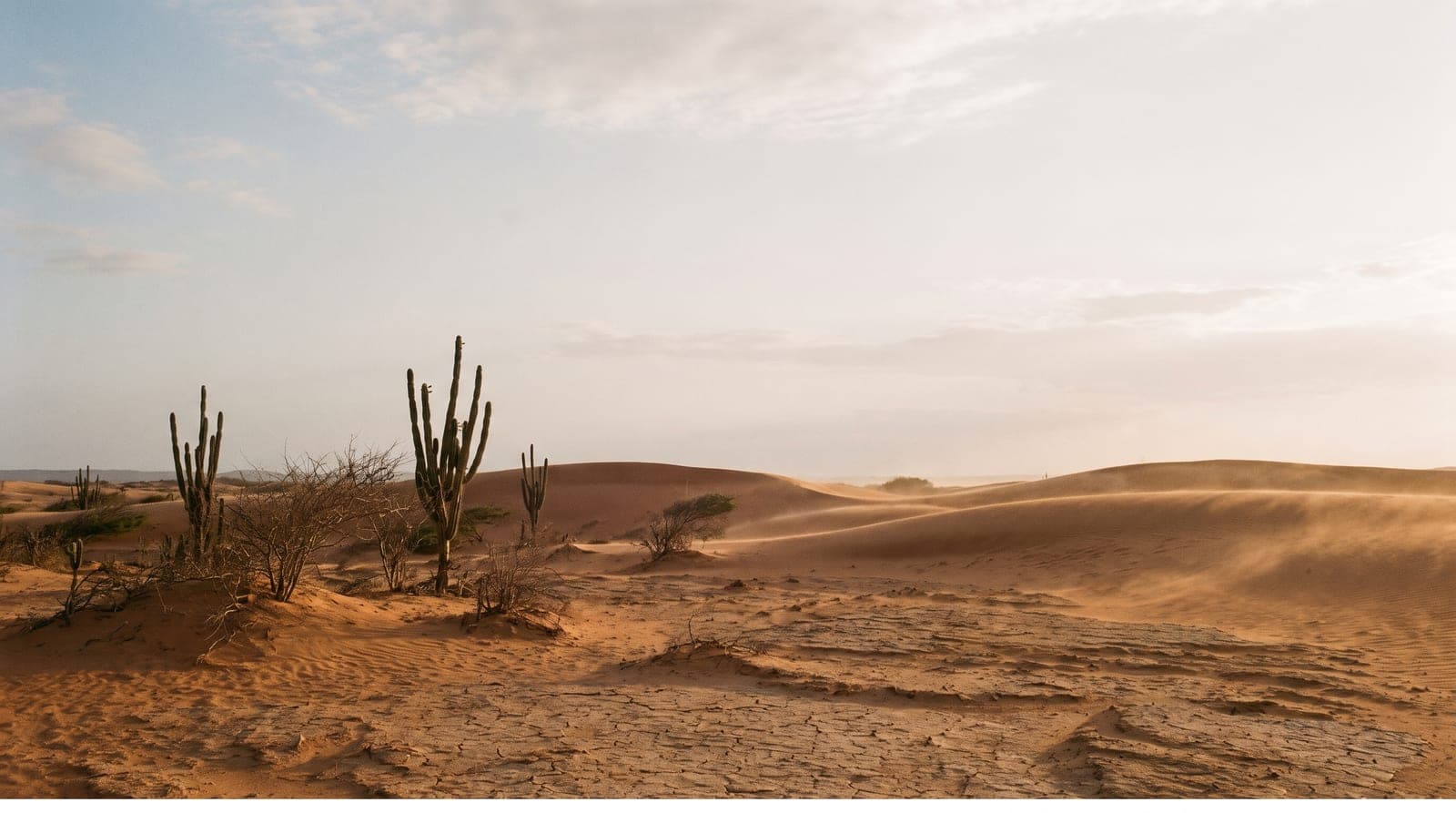
La Guajira is a dry, wind-swept peninsula at the northernmost tip of mainland South America — true desert in the north, with little rain. It reaches across the border between Colombia and Venezuela. This is the home of the Wayuu, with around 380,000 people (2018 DANE census) the largest Indigenous group in Colombia.
The Wayuu are a matrilineal society: belonging and clan (eirukuu) pass through the mother's line, and women hold central roles. There are about thirty clans, each with an animal as its sign. Unlike many Indigenous peoples, the Wayuu were never fully subjugated by the Spanish — they kept their language, Wayuunaiki, and their independence.
Weaving is the women's world and a real livelihood. Girls traditionally learn it during the encierro, the seclusion that marks the passage into womanhood. La Guajira is also one of Colombia's poorest regions (DANE, 2023) — so what a bag earns is rarely a small thing.
For us that means buying directly in La Guajira, with the aim of fair pay — and introducing the weavers by name only once they agree to it. Choosing a real, named mochila over an anonymous 'boho bag' means keeping this craft, and the people behind it, visible.
In the end, a mochila is a piece of La Guajira that you carry with you.