4 June 2026 · 1 min read
Wale'kerü — the spider who taught weaving
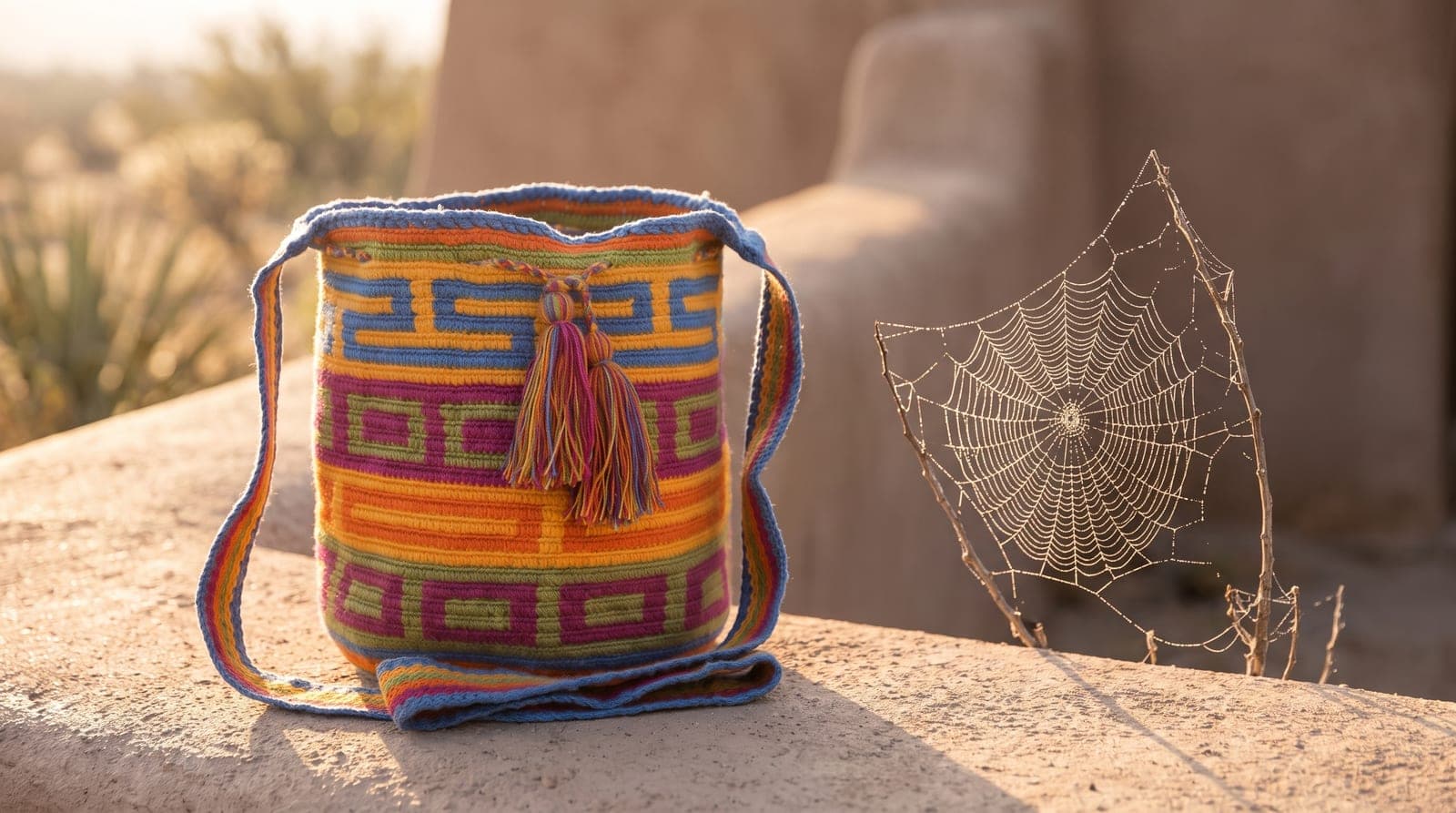
Ask the Wayuu where weaving comes from and they answer not with a craft but with a myth. At its centre is Wale'kerü — in Wayuunaiki the word simply means 'spider'. It was she who taught the women of the Wayuu to weave.
In one of the best-known tellings, a young hunter named Irunúu brings home an outcast girl. By night she turns into a master weaver. Given cotton, she swallows it, and thread comes from her mouth already spun and ready to weave. She works while everyone sleeps; by dawn there are belts (fajas) and hammocks (chinchorros), threaded through with the geometric kanas.
It is no gentle fairy tale. A broken promise sends Wale'kerü back into spider form, and she vanishes for good — leaving only a shred of web behind. But the craft stays, passed on to 'women of good judgement'. There are many versions of this oral tradition; one of the most careful was recorded by the Wayuu author Ramón Paz Ipuana.
For the Wayuu, weaving is more than handwork — it is held to be a way of thinking. Many girls still learn it from mother and grandmother during the encierro, the passage into womanhood. To carry a mochila is to carry a little of that lineage. That is why we tell the story rather than simply sell a bag.